
What's Happening in Energy highlights the most interesting findings from public utility commission filings.
.png?width=50&name=34C0AE28-DE08-4066-A0A0-4EE54E5C1C9D_1_201_a%20(1).png)
What's Happening in Energy highlights the most interesting findings from public utility commission filings.
Hey there, it's Nat –
This week’s WHiE covers:
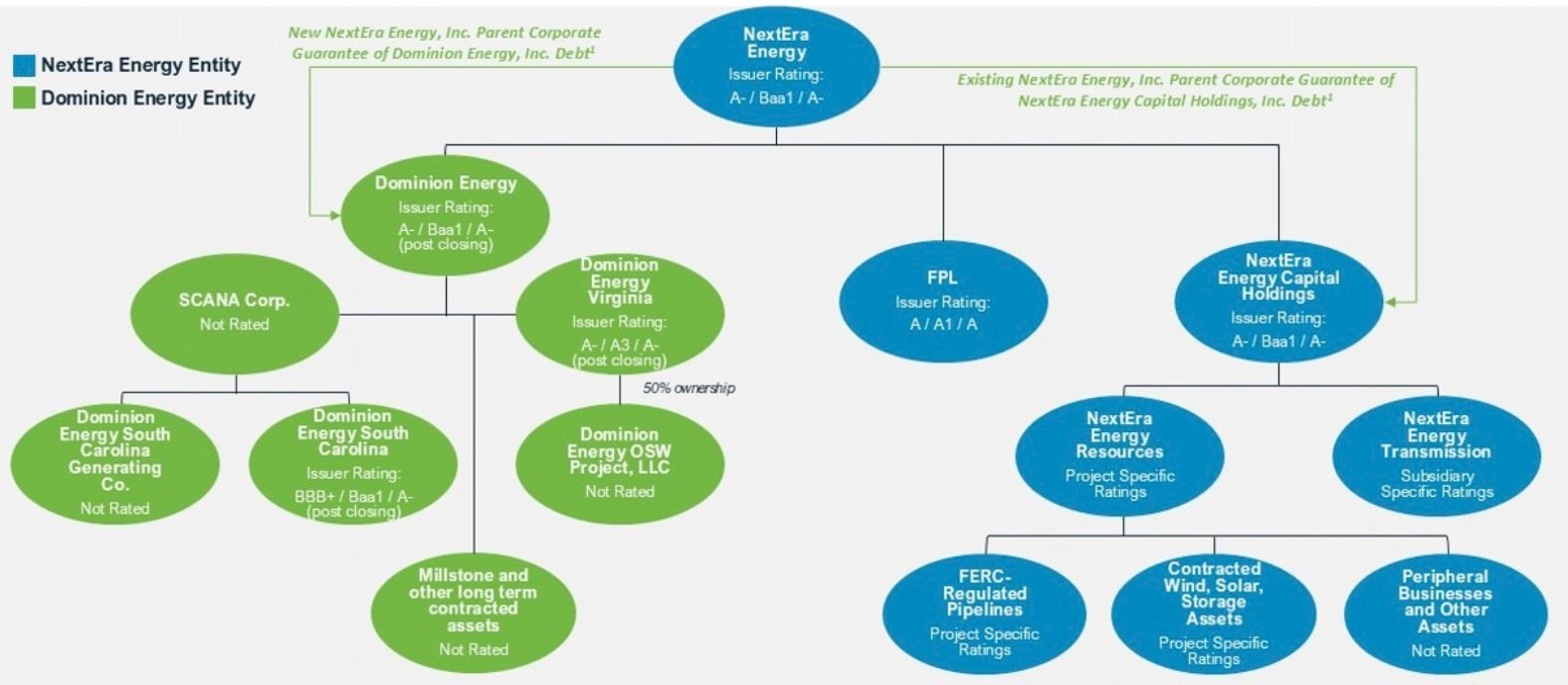
- The organizational structure of a merged Dominion-NextEra from a Securities and Exchange Commission (SEC) 8-K,
- Two gas projects from Advanced Power totalling over 2 GW in the Midwest,
- Replacing an old barn with a new warehouse to store equipment for a rural electric cooperative in the Southeast,
- A new slate of EV programs for a utility in the Rockies,
- And much more!
Skim it, swim in it, or cannonball in – linked filing and Halcyon queries are waiting. Here are two queries to push you off the deep end:
- In Nevada, the Vehicle-Grid Integration Council and Tesla commented on NV Energy’s modification of Generating Facility Interconnections Rule No. 15, requesting changes to definitions, applicability, and more.
- In Minnesota, stakeholders have four-months to submit comments on these topics for Otter Tail Power’s 2027-2041 Integrated Resource Plan.
What's Happening in Energy — May 22
Powered by Halcyon
____
In ERCOT, the Technical Advisory Committee held meetings on May 19-20 to discuss the Batch Zero study process for large loads. A presentation chock-full of details on next steps for the batch study process highlights a few different approaches and key timeline uncertainties. We asked Halcyon for a concise explanation. Halcyon’s response described the three evaluation processes that ERCOT conducts for the “Bring Your Own Generation” (BYOG) approach.
-
Batch Study: Evaluates load as grid-supplied only to determine firm load allocation and withdrawal limits.
-
Generation Interconnection Study: Assesses the generator independently to determine export capability and interconnection requirements.
-
Transmission Planning Study: Models load and generation together to assess full system impact under N-1 conditions and identifies network upgrades for the long-term, post-BYOG configuration.
The presentation also includes a “HIGHLY PRELIMINARY” estimate of load and available generation (split out by categories from the ERCOT Planning Guide) in 2032. ERCOT’s current Batch Zero includes ~220 GW of this load.
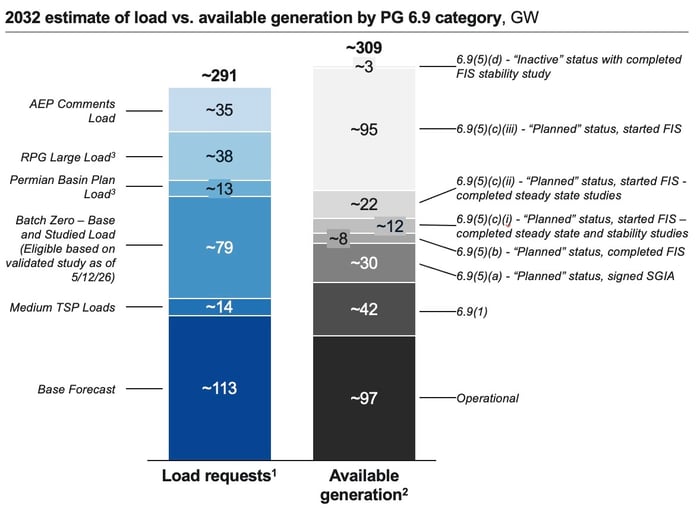
ERCOT describes this scope as “aggressive”, noting that “Further expansion would push modeled load well beyond reasonable study bounds…”
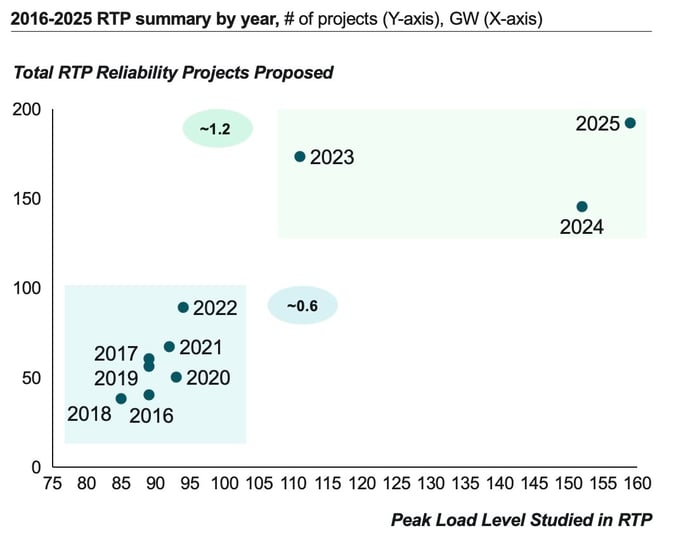
Fully studying this 2032 load would entail complex coordination with utilities and models with “fully resolved system configurations across all years”. To hammer home the complexity point, ERCOT included a chart visualizing the number of Reliability Projects proposed vs. the peak load studied in its Regional Transmission Planning (RTP) process. The number of projects proposed increases non-linearly with the level of peak load studied.
____
Also in ERCOT, the system operator requests the Public Utility Commission grant an exception for ERCOT to prepare a Regional Transmission Plan (RTP) for 2026 and Capacity, Demand, and Reserves (CDR) report for May 2026 (ERCOT request). ERCOT argues that the load forecast established through the Batch Zero process obviates the need for a CDR report shortly after, and the significant transmission planning resources that would be required for the 2026 RTP are better utilized for the Batch Zero studies.
____
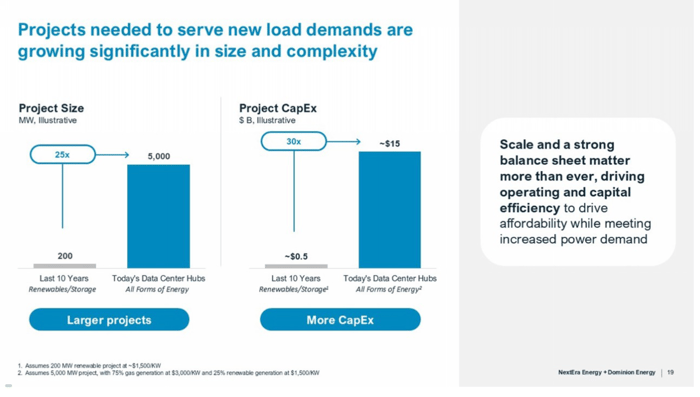
At the SEC, NextEra filed an 8-K for its proposed merger with Dominion (NextEra 8-K). Page 148 visualizes the stark jump in cost needed to serve “new load demands”. According to NextEra, projects 25x larger require 30x the capital expenditure.
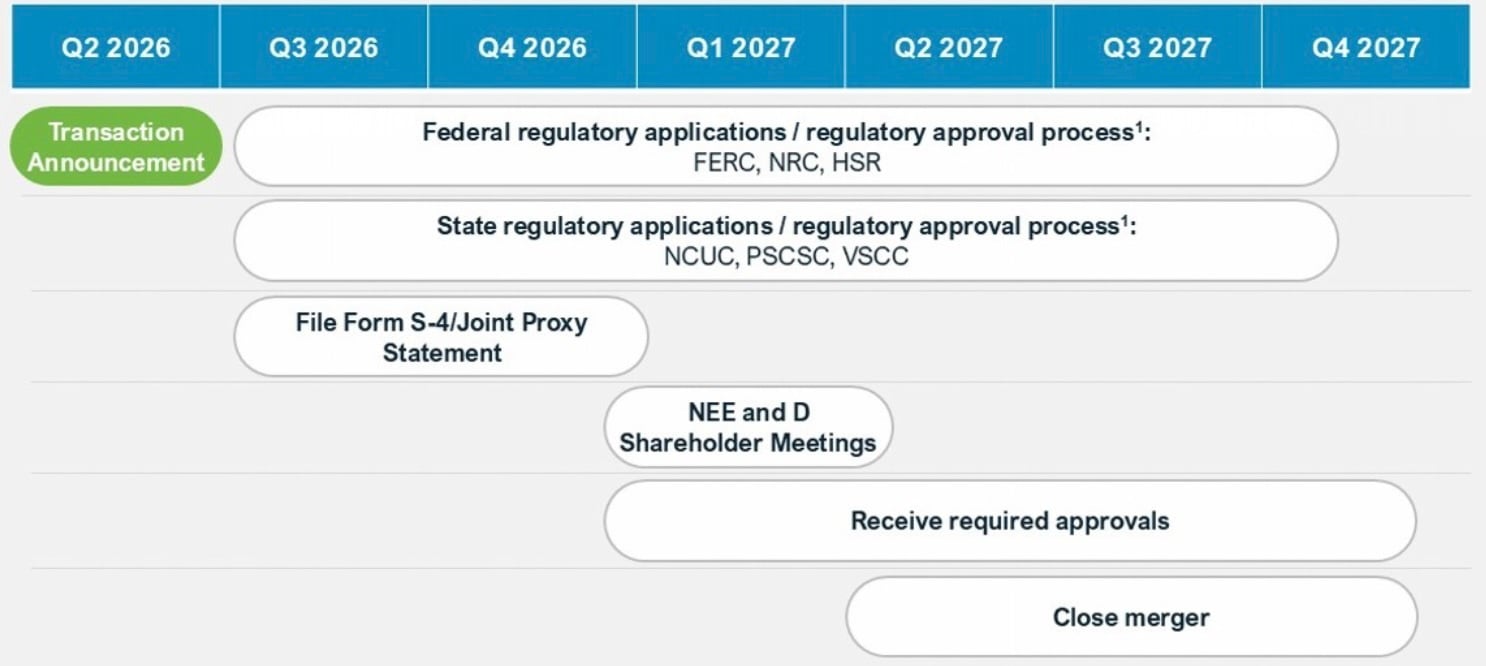
The filing included the following timeline of the regulatory road ahead. We’ll be tracking the FERC and state commission dockets closely.
The filing also included the organizational structure of a post-merger NextEra. Behold.
____
In Iowa, NextEra Energy Duane Arnold, LLC (NEDA) filed a brief justifying its request for a CPCN to recommission the Duane Arnold Energy Center nuclear units. We asked Halcyon to explain NEDA’s arguments. NEDA argued it needn’t prove cost effectiveness because it is not subject to rate regulation. NEDA included the following footnote with some spicy-for-a-footnote language:
“An assessment of cost-effectiveness cannot be limited to construction cost or a pure price per kilowatt-hour metric. If Iowa Code § 476.53(2)(a) required only the most cost-effective option as determined on these bases, then only intermittent renewable energy resources could ever be constructed. This is an absurd result that is inconsistent with legislative intent for reliable electric service – the statute must, at a minimum, allow for the consideration of other factors relevant to electric service.”
____
In Oregon, stakeholders responded to the Utilities Commission’s request for feedback on the Standard Information Requests (SIRs) that the Commission will issue to utilities in future Integrated Resource Plans (IRP). Halcyon grouped the feedback into five buckets:
-
Administrative Burden and Alignment with Rules,
-
Technical Feasibility and Data Limitations,
-
Data Privacy and Confidentiality,
-
Procedural Flexibility and Timing, and
-
Recommendations for Clarification.
One comment from Portland General Electric (PGE):
“To the extent possible, PGE encourages removal of confidential and highly confidential data from the SIRs. Where needed, such data could be provided through a separate submission or isolated to an easily redactable portion of the template…PGE is concerned about the practicality of redacting individual cells within a workbook and designating portions of the workbook as either confidential or highly confidential.”
____
In Ohio, Advanced Power is developing a 1300 MW combined cycle gas plant called Chestnut Run Energy Facility. Public Utilities Commission Staff recommended approval of the project’s certificate of environmental compatibility and public need (CECPN) pending before the Ohio Power Siting Board (Staff recommendation). Read Halcyon’s summary of Staff’s recommendation and proposed conditions. You’ll want to read the entire response, but here’s one key sentence: “Staff finds the facility consistent with regional plans for the expansion of the electric power grid and that it serves the interests of system economy and reliability.”
Halcyon angle: You can think of Halcyon query responses as a source of “infinite interns” whose performance depends on the clarity of the instructions that they are given. Check out the successive list of queries that we tried on this document: 1, 2, and 3. The third one is the best because it is the most prescriptive and clear–just what an intern needs to get the job done. Read Halcyon’s guide for best query writing practices for more guidance on how to get the best out of the platform.
____
Also in Ohio, Fairfield Energy Center, LLC, filed an application for a CECPN to build over 2 GW in gas and BESS capacity. The same developer of the Chestnut Run Energy Facility–Advanced Power–is developing this project (application).
“Fairfield Energy Center, LLC (FEC) is proposing to develop, construct, and operate Fairfield Energy Center (the Project), a new natural gas-fired electric generating facility with a net generating capacity of up to 1,350 megawatts (MW) located on an approximately 122-acre property in the Village of Millersport, Fairfield County, Ohio. The Project is intended to provide power directly to proposed data center buildings to be located adjacent to the Project on the Property.”
The project will also have “approximately 1,040 MW of battery energy storage.”
How much will it cost? We may never know.
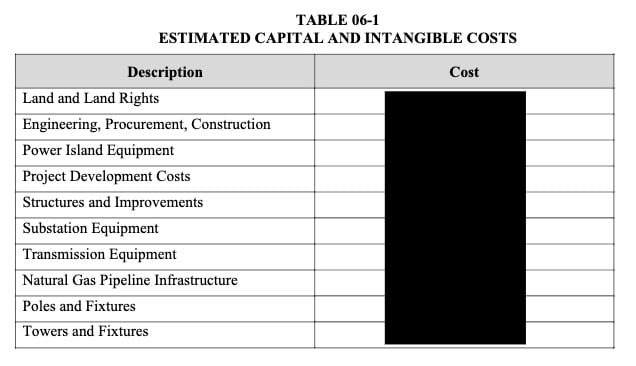
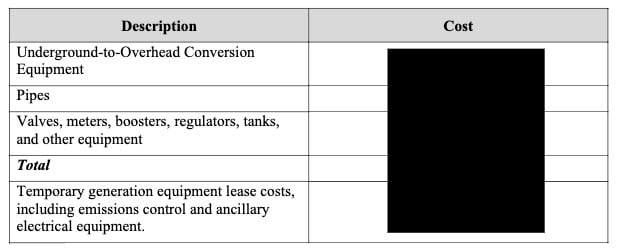
However, if you are interested, the presence of Procyon lotor (also known as a “raccoon”) has been noted within the project site. How does the developer know this? That observation is unredacted (see below).
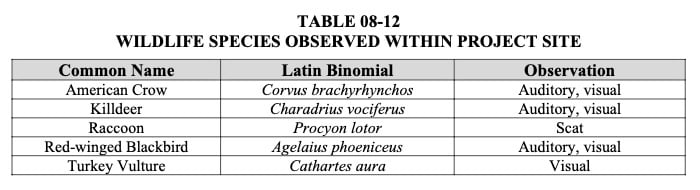
Halcyon angle: In our Gas Power Plant Tracker and BESS Tracker, we flag if facilities are behind the meter. In the BESS tracker, we also highlight if the units are co-located with data centers.
____
In Kentucky, a proposal to demolish a “tobacco barn” (used for storage) and replace it with a warehouse (without a CPNC) receives approval from the Public Service Commission. The South Kentucky Rural Electric Cooperative Corporation (RECC) is proposing to pay for the new warehouse with proceeds from the sale of its Pulaski County Property, which RECC had used for its annual meetings from 1961 to 2017.
“South Kentucky RECC purchased a 69-acre farm in Pulaski County on July 24, 1961 (Pulaski County Property) and, until 2017, held its Annual Meeting at the location. However, after 2017, South Kentucky RECC stated that it has held its Annual Meeting at its headquarters with a virtual option…South Kentucky RECC purchased the Pulaski County Property for $1.00 and, therefore, argued that it is not required to seek Commission approval for the sale of the Pulaski County Property pursuant to KRS 278.218, as the original book value was less than $1,000,000. South Kentucky RECC expects to sell the Pulaski County Property for over $1,000,000. If the proceeds are insufficient for the labor and materials of the new warehouse, South Kentucky RECC plans to use general funds for the remainder. The estimated cost of the warehouse construction is approximately $1,225,000, and the anticipated cost to demolish the old barn is $25,000.”
____
In MISO, more updates on the Zero-Generation Interconnection Agreement (ZGIA). The system operator released draft tariff language to implement ZGIA after receiving stakeholder feedback. Check out this presentation and Halcyon’s summary of the proposed changes. The proposed changes show that MISO is considering revising its earlier stance that a ZGIA can offset a load’s capacity contribution up to the planning reserve margin requirement (PRMR) (initially covered in the May 1st WHiE). “Instead of being limited by the Initial PRMR of the Associated Load, accreditation will be limited by the load forecast of the Associated Load, along with an accounting of avoided losses due to the proximity of the Resource”.
Halcyon angle: Three weeks ago, we covered MISO’s proposal to allow load-serving entities with a ZGIA to offset their capacity contribution up to the Initial PRMR. Now, MISO is proposing to scrap that idea. This change was buried in the answer to question 5 of MISO’s responses to stakeholder feedback. We would not have known about this important revision were it not for our weekly alert on ZGIA–sign up here. Also, follow the Halcyon docket for ZGIA here.
____
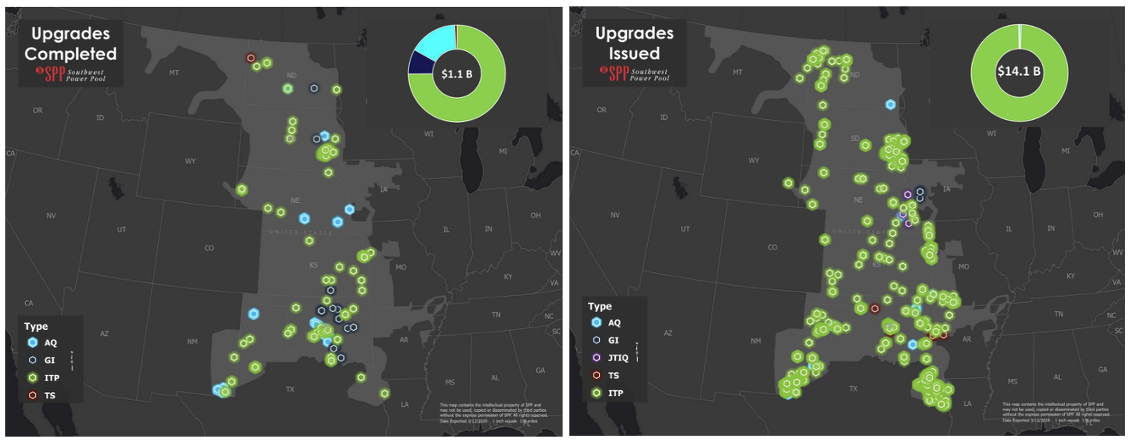
The Southwest Power Pool (SPP) Transmission Expansion Plan (STEP) report is out. It highlights 155 completed upgrades worth $1.1 billion (image on left) and 749 issued upgrades worth $14.1 billion (image on right) for January 1-31, 2025. Twelve projects were withdrawn, worth $15.5 billion. Check out a Halcyon summary of the report or download the Word file directly to check out the visuals.
____
Halcyon Team Query of the Week
- In New York, a Hybrid Electrification Study evaluates hybrid electrification (where an electric heat pump system is paired with a fossil fuel heating system) as compared to full electrification. Read a summary of the Charles River Associates study.
- In PJM, the Independent Market Monitor (IMM) released its 2026 Quarterly State of the Market Report, which found energy markets reliable and competitive in the first three months of 2026, but deemed the 2025/2026, 2026/2027, and 2027/2028 capacity markets non-competitive. Read Halcyon’s summary of why the IMM found capacity markets non-competitive (hint: several structural and performance factors).
New Docket of the Week
-
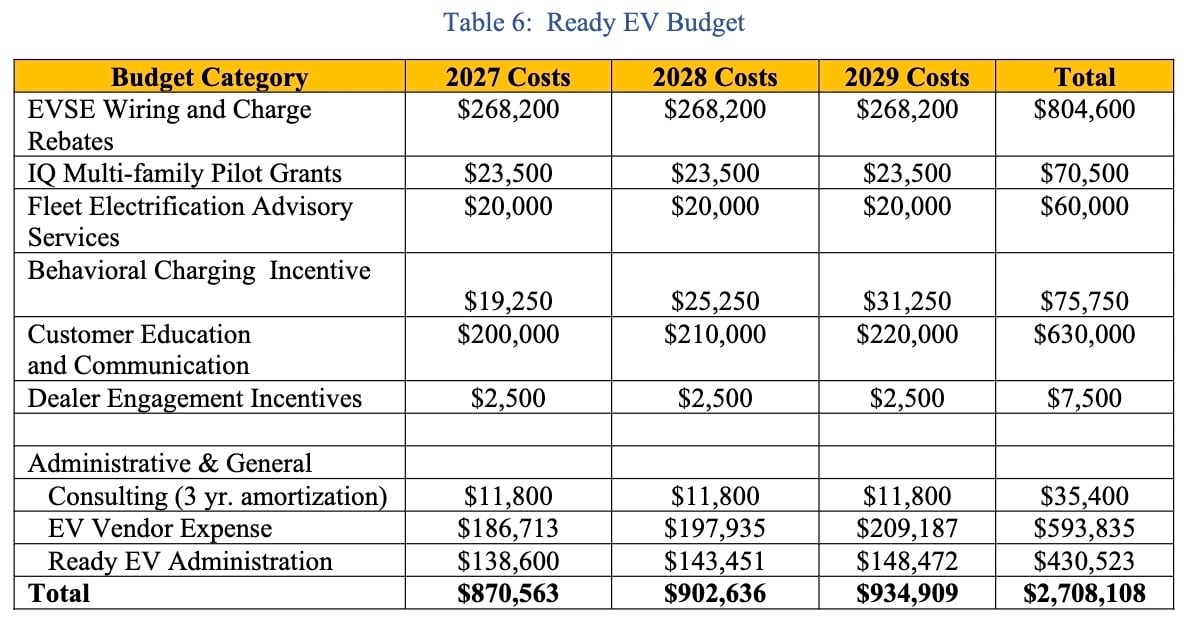
In Colorado, Black Hills Electric filed for approval of its 2027-2029 Transportation Electrification Plan (TEP)--also known as the Ready EV plan (docket profile). Check out Halcyon’s summary of the budget, programs, and goals. Don’t forget to poke around the sources referenced in the response. Here’s the budget across years for each program.
Public Comment Excerpt(s) of the Week
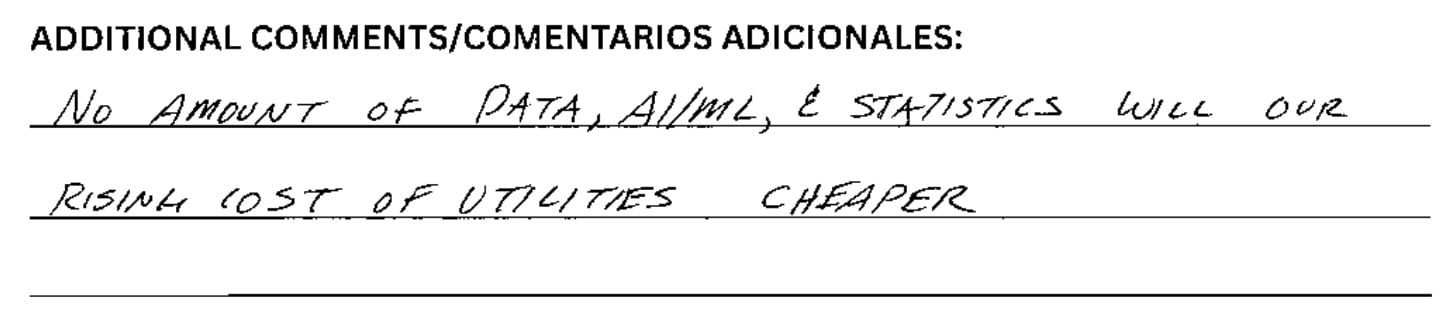
- In Texas, the Sembrando Esperanza Coalition filed 1118 public comments against El Paso Electric’s CCN application for the 366 MW McCloud Generation Facility proposed to serve a Meta data center (docket profile). The project is part of the hyperscaler’s Wurldwide data center campus expected to reach up to 1 GW by the end of the decade. Comments focused on all the topics that are rising in urgency–pollution, water use, and affordability. One was blunt, despite missing an active verb: “No amount of data, AI/ML, & statistics will [make] our rising costs of utilities cheaper.” (comment)
Most clicked item from last week’s WHiE