
What's Happening in Energy highlights the most interesting findings from public utility commission filings.
.png?width=50&name=34C0AE28-DE08-4066-A0A0-4EE54E5C1C9D_1_201_a%20(1).png)
What's Happening in Energy highlights the most interesting findings from public utility commission filings.
Howdy there, it's Nat –
This week’s WHiE covers:
- An illustrative example of how a utility plans to surcharge large loads for incremental generation costs in the Rockies,
- Arguments from utilities to exclude MISO and SPP from competitive transmission solicitation requirements at the FERC,
- Air permits for concrete batch plants to support data centers in Texas,
- Ongoing debate and comments on a rate case from a U.S. congressman in New York,
- And much more!
Read at your leisure and choose your own adventure — skim the surface, or dive deeper with linked filings and Halcyon's suggested queries. Here is a Halcyon query to start you off:
- In Texas, Senate Bill 6 (SB6) rolls along: 21 comments were filed this week — from stakeholders ranging from the Data Center Coalition and Enchanted Rock to the Sierra Club and EDF (summary of comments and areas of alignment) — on the proposed Large Load Demand Management Service, a competitive procurement mechanism established by SB6 for demand reductions from large loads in ERCOT.
What's Happening in Energy — Apr 10
Powered by Halcyon
____
In Minnesota, Commissioners submitted their “Preferred,” “Revised”, and “Updated Revised” Decision Options for Phase 2 of Xcel’s Capacity*Connect program. (Commissioner Ham’s approval with modifications.) The program would target 50-200 MW of battery energy storage systems owned by the utility and interconnected to the distribution grid. The budget would range from $152 million for 50 MW to $430 million for 200 MW through 2028 (docket profile).
Commissioner Ham’s priorities include:
- Emphasizing the benefits of deploying BESS to defer infrastructure investments through targeting feeders with peak coincident with MISO;
- Locating BESS in parts of the grid to absorb excess DER generation;
- Requiring Xcel to structure its relationship with Energy Impact Partners and Sparkfund “in such a way that the Company could not benefit from investment in Sparkfund for the duration of its contract”
____
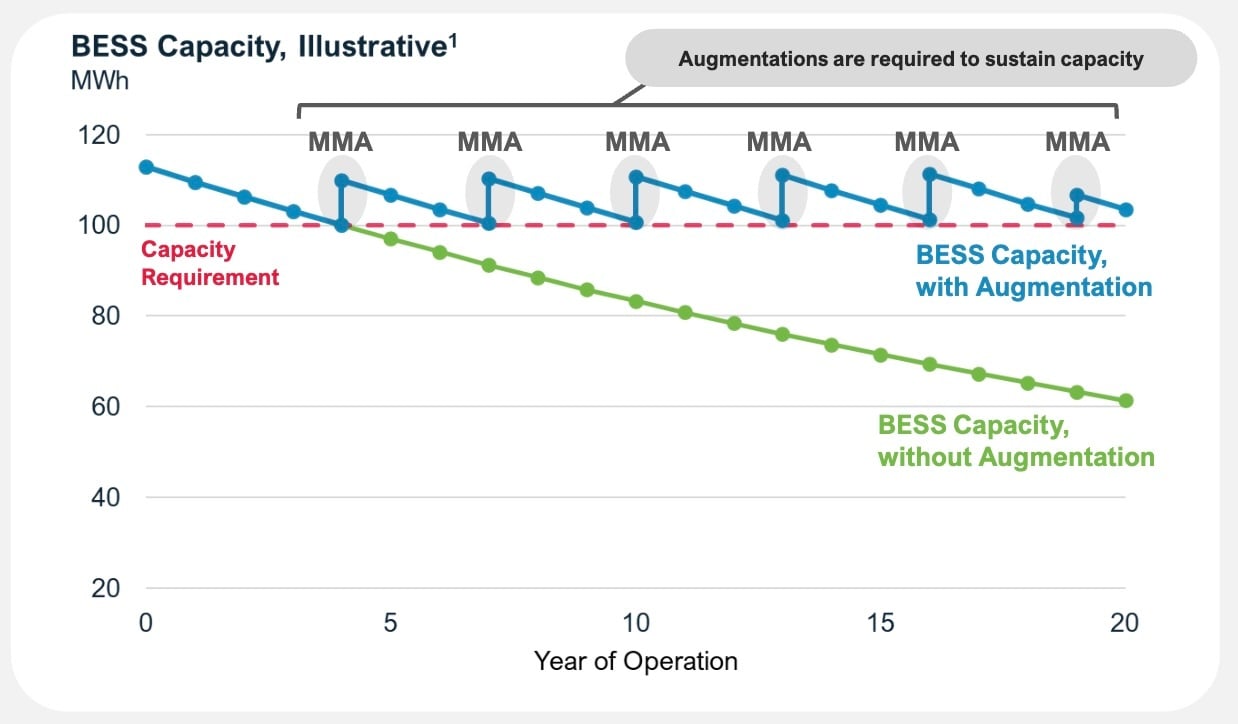
In CAISO, NextEra proposes expedited approval for BESS augmentations by allowing operators to simply notify the system operator and provide technical data. Augmentation offsets normal battery degradation by adding a small number of inverters periodically throughout the life of a project to maintain capacity. NextEra included the following graphic to portray how often augmentations occur over the life of a 20-year project.
Replacing the current up-to-12-month “Material Modifications Assessment” (MMA - definition) process would ensure that these regular updates can happen faster.
 ____
____
The New Mexico Department of Justice (DOJ) is arguing that the Public Regulation Commission should determine a $400 million, 8-million share stock issuance to a Blackstone subsidiary by Texas New Mexico Energy (TXNM) is void and incurable (DOJ brief). The state DOJ argued that the share issuance was “integral” to the TXNM-Blackstone subsidiary merger, that the Blackstone subsidiary voted all 8 million newly issued shares in favor of the merger, and that the Commission should have granted prior approval. The applicants disagree, arguing that the issuance of shares did not result in a transfer of “control” (joint applicants’ response). Read Halcyon’s explanation of the opposing legal arguments.
____
In Texas, another early indicator of data center construction, this time from the Texas Commission on Environmental Quality (TCEQ). TCEQ issued a standard permit for a Concrete Batch Plant in Hill County (TCEQ technical review). The plant would operate 24/7 at “a maximum production rate of 300 cubic yards per hour not to exceed 650,000 cubic yards per year in any rolling 12-month period…to complete a single project (Nexus Data Center Project - Hubbard).”
Separately, TCEQ also recommended the issuance of a Federal Operating Permit for Vantage Data Centers’ proposed TX21 facility in San Antonio (notice). A hearing will take place on May 28, 2026.
Halcyon angle: Did you know Halcyon now ingests air permits? These permits offer a different view into the data center development pipeline. These filings span all stages of development, from early-stage projects to those near completion. Coverage currently includes Ohio, Texas, Virginia, Georgia, and Tennessee, with more states coming soon. Check out the results by filtering to all the environmental permitting agencies and the keyword “data center” – or narrow your focus to track specific activity like Vantage's TX air permits through their entity number, monitor weekly by clicking “copy alert”, or query specific permits.
____
At the FERC, approximately $1.5 billion is at stake for several New England utilities which have filed a Motion to Stay seeking to delay a Commission-ordered retroactive refund. The Commission determined that the base return on equity for the “New England Transmission Owners” (NETOs)” should have been 9.57% instead of the 10.57% that has been in place since 2014. The NETOs argue that this large and abrupt refund could cause rate shock if it is reversed in a rehearing.
“It appears that the Commission may not have recognized the extraordinary scope of the refunds associated with the Retroactive Refund Period…The magnitude of the required refunds is astonishing.”
We asked Halcyon to explain how FERC arrived at the new base return on equity (ROE). According to the response, the FERC excluded risk premiums from its modeling and used a composite of DCF and CAPM models.
____
In New York, the NYSEG/RG&E rate case is ongoing (follow along with an alert). The utilities are proposing double-digit percent bill increases (table, left) and are at odds with Commission Staff’s, whose January rebuttal filings reflect a revenue requirement nearly $500 million lower (table, right). The largest gap is $413 million less for NYSEG electric.
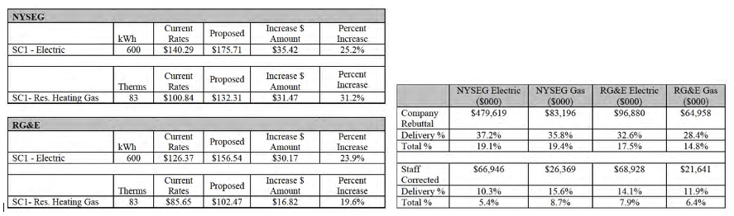
After failing to reach a settlement agreement for a multi-year rate plan, the utilities are now seeking a single year rate increase ending on April 30, 2027. The utilities' 637 page post-hearing brief covers a lot of ground including balancing rate pressures and the financial risks it is facing. We asked Halcyon to explain further or you can follow this case with an alert. Seriously, read the Halcyon explanation. It will save you approximately 630 pages of your time.
____
MISO held its Advisory Committee meeting a week and a half ago. The meeting minutes were released this week, so we asked Halcyon to summarize the minutes with an eye towards the challenges raised by stakeholders. Interestingly, an update from the Finance Committee Chair noted that interconnection queue withdrawals are increasing MISO refunds for deposits and the interest on those deposits. Just in 2026, the Chair projects spending $60 million in refunds on interest alone.
____
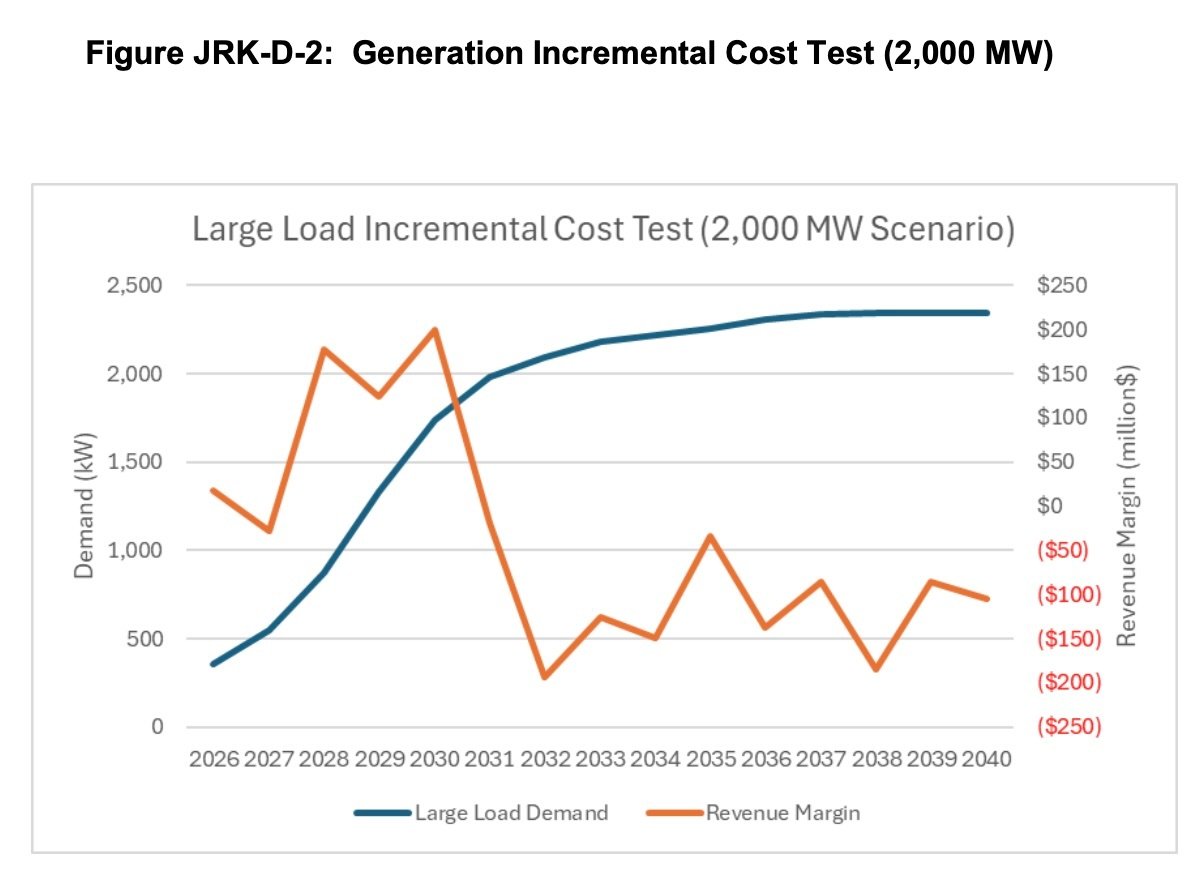
In Colorado, Public Service Company (PSCo/Xcel) presented illustrative examples of how it will allocate incremental generation and transmission costs to large load customers under its Schedule TL tariff (filing). If incremental costs exceed the “standard allocation” that the utility currently uses to allocate generation and transmission costs, then qualifying large loads (greater than 50 MW) will be charged the excess through a surcharge on the Schedule TL tariff.
PSCo presented the following charts showing how the standard allocation would initially cover the incremental costs for generation to serve a 944 MW facility from 2026-2030. But starting in the 2030s the incremental costs would exceed the standard allocation, incurring a surcharge on the large load tariff.
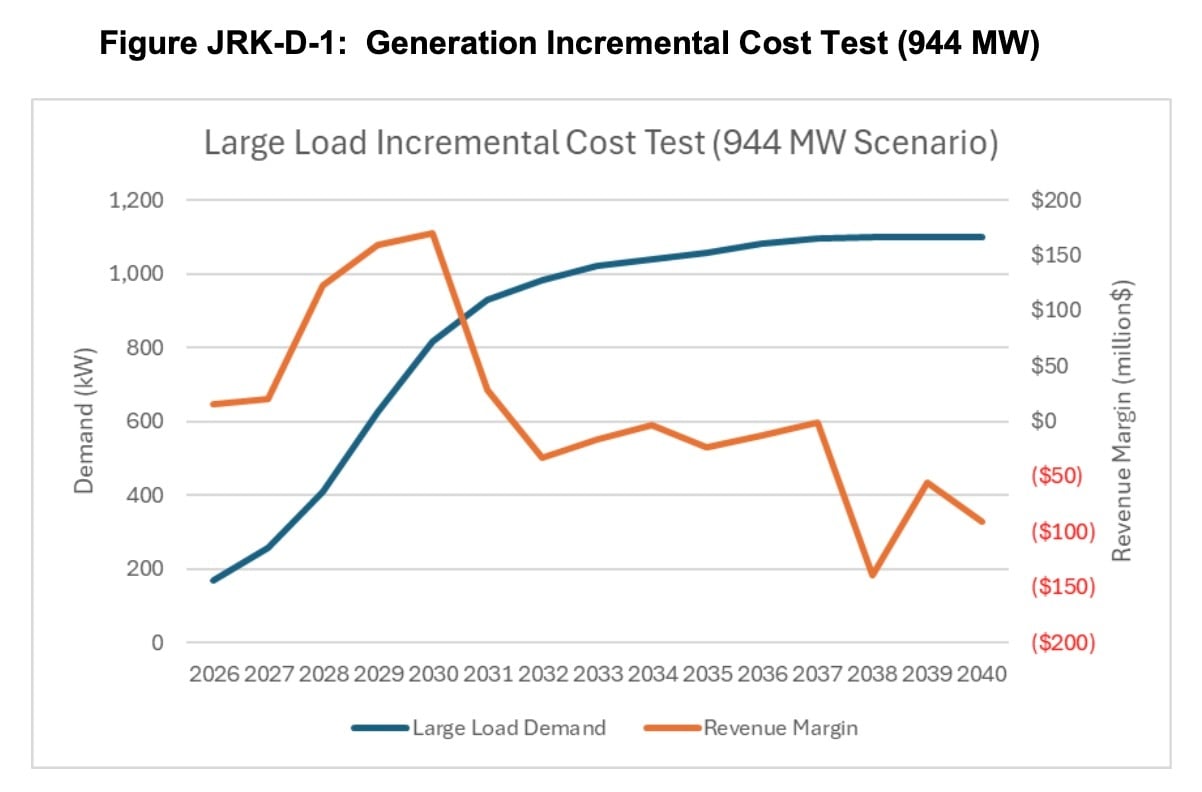
For a 2000 MW load, the incremental costs sharply exceed the standard allocation in 2030 by up to $200 million in 2031.
____
In Wisconsin, WPPI Energy submitted an application on behalf of the Village of Waunakee for a Bring Your Own Device (BYOD) demand response program. WPPI Energy filed an application for 27 of its member utilities to achieve the economies of scale necessary (100,000 households) to finance the program administered by EnergyHub. We learned these details by asking Halcyon a simple question: “What is WPPI Energy?”.
__
In Maryland, the Public Service Commission approved the energy storage plans for BGE, Potomac Edison, Pepco, and Delmarva to issue Requests for Proposals (RFPs) for energy storage plans to meet the 150 MW goal established by the Next Generation Energy Act. We asked Halcyon to summarize each utility’s energy storage plans, RFPs, and timelines.
____
Halcyon Team Query of the Week
-
In Tennessee, what are the key required environmental filings for proposed gas power plants?
- In Ohio, Cleveland Thermal, a district energy utility company, is seeking approval of a thermal agreement to supply chilled water for cooling at a residential apartment building in Cleveland (learn more).
New Docket of the Week
-
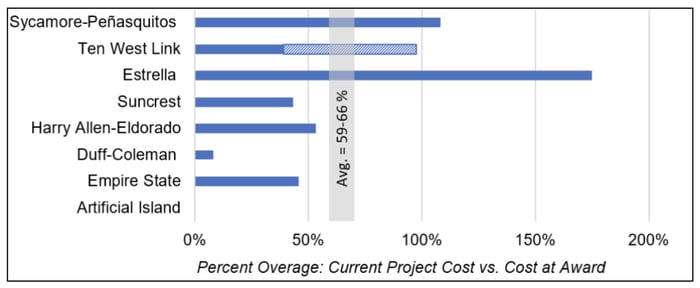
Also at the FERC, a coalition of utilities in MISO and SPP filed a complaint about the solicitation requirements imposed under Order No. 1000 for regional transmission projects (docket profile). For those who have not been following the drama for the past 15 years, this Order required system operators to modify their open access tariffs to include solicitation processes for non-incumbents to build certain “non-local” or regional projects. The utilities request that the Commission find these requirements unjust and reasonable for MISO and SPP because of the 16-20 month delay that the process adds to the transmission development process. In an era of rising load growth, they argue that these delays have major financial impacts. Supporting testimony estimated the “social welfare loss” from failing to meet AI demand at “$394 million to $749 million per 1,000 MW of demand per year” (figure). The utilities also present evidence that cost overruns for these projects average 59-66%.
The utilities recommend two potential remedies: “(1) exempting from solicitation any transmission project that is needed to interconnect new generation or load, if delaying the project would delay service to generation or load; or (2) temporarily pausing the solicitation process.” They request that FERC take action by July 16, 2026.
Public Comment Excerpt(s) of the Week
- In New York, US Representative Josh Riley expressed concern that New York State Electric and Gas (NYSEG) has not proven that the Public Service Commission can evaluate its credit rating and capital structure independently from its parent companies Avangrid and Iberdrola. The Public Service Commission requires this proof of so-called “ring-fencing” provisions through confirmation from two independent credit rating agencies (full comment).
“NYSEG has not done that here. Instead, NYSEG’s expert witness quoted language that does not appear to exist from a Moody’s report that does appear to exist while citing a document that is not even a credit rating agency report; cited an S&P report about NYSEG that is actually a Moody’s report about RG&E; and ignored a February 2026 Fitch report that describes NYSEG’s ring-fencing as “porous.””
Most clicked item from last week’s WHiE